
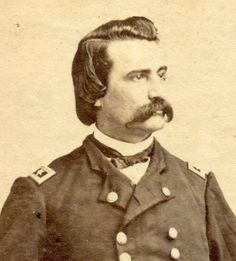
General John A. Logan
Many historical accounts attribute the origins of Memorial Day (originally known as Decoration Day) to General John A. Logan, Union General, U.S. Representative and Senator from Illinois, and 1882 Vice Presidential candidate.
Following the Civil War, General Logan was instrumental in the founding of the Grand Army of the Republic (GAR), a veterans group comprised of former Union Army soldiers, and served as the GAR’s second elected national commander. On 3 March 1868, General Logan issued General Order No. 11, which called for a national day of remembrance for Civil War dead. This order served as the basis for what became the national holiday of Memorial Day.
Originally honoring only those lost while fighting in the Civil War, the holiday evolved to commemorate American military personnel who died in all wars, including World Wars I and II, The Vietnam War, The Korean War and the wars in Iraq and Afghanistan.
For decades, Memorial Day continued to be observed on May 30th, the date General Logan had selected for the first Decoration Day. But in 1968, Congress passed the Uniform Monday Holiday Act, which established Memorial Day as the last Monday in May in order to create a three-day weekend for federal employees. The change went into effect in 1971. The same law also declared Memorial Day a federal holiday.
Sources: Adapted from John A. Logan wikipedia page, History.com and ArmyHistory.org